

Ingrained Lean Thinking Behind Industrial Excellence- 2026 Japan Lean Manufacturing Study Tour
e-works concluded its 11th Japan Lean Manufacturing Study Tour from June 28 to July 5, 2026. The immersive 8-day study tour kicked off in Nagoya and concluded in Tokyo, covering 11 benchmark venues across Japan.
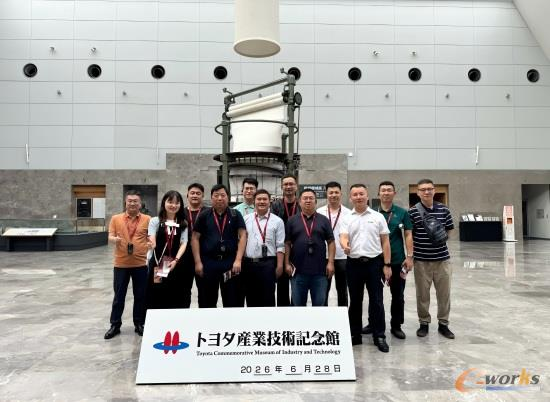
The study tour highlighted two defining strengths of Japanese manufacturing: ingrained service awareness and pervasive lean mindsets. Far from superficial workshop slogans, these core principles are embedded into every operational link, including product design, production workflows, employee conduct and even public infrastructure details, forming a cultural consensus that permeates Japanese society. Across all sectors, from corporate executives and frontline hospitality staff to factory technicians and retail employees, practitioners deliver meticulous, considerate and standardized services, building a solid foundation of mutual respect and trust for industrial and social operations.
Throughout the cross-city journey covering Kyoto, Tokyo and Sendai, participants witnessed the iconic punctuality and high-efficiency operation of Japan's Shinkansen bullet trains. Even at Tokyo Station, one of the world's busiest transportation hubs, train scheduling and operation maintain impeccable accuracy and streamlined efficiency. The renowned “7-minute miracle” — where cleaning crews fully sanitize and reset an entire train during its short turnaround interval — remains a benchmark case for global refined management.
Beyond manufacturing workshops, Japan's 5S management system has been fully extended to public infrastructure and daily social scenarios, sustaining immaculate order in urban streets, industrial plants and office spaces alike.
This rigorous pursuit of quality and standardization also underpins the country's strict food safety governance. During the entire tour, all participants consumed raw and cold prepared foods daily without any physical discomfort, a tangible reflection of Japan’s robust quality control system.
Such widespread lean culture and service-oriented ethos have fostered Japan's enduring manufacturing advantage centered on refined operation and continuous improvement, delivering valuable practical references for global manufacturing enterprises pursuing high-quality transformation and lean upgrading.
1. Toyota Commemorative Museum of Industry and Technology (Nagoya) — The Cradle of Modern Lean Thinking
Constructed on the site of Toyota's earliest pilot factory, the 41,000-square-meter red-brick heritage venue documents the company’s century-long transformation from a textile machinery manufacturer to a global automotive leader.
Central to the exhibition is the 1924 Model G automatic loom, which embodies two groundbreaking technological innovations that laid the theoretical foundation of Toyota’s production philosophy: automatic shuttle replacement and warp yarn auto-stop functionality. The optimized shuttle structure enabled continuous production with clean thread switching, while the self-monitoring yarn brake instantly halted operations upon thread breakage, eliminating defective products at the source. The technological upgrade allowed a single worker to supervise 30 to 50 looms simultaneously, establishing the core logic of Jidoka (autonomation) — one of the two foundational pillars of the Toyota Production System (TPS).
The museum's automotive exhibition zone showcases Kiichiro Toyoda’s pioneering R&D journey, from early self-modified motorized bicycle prototypes to Japan’s first mass-produced AA sedan. Interactive displays intuitively compare traditional manual workshops with modern flexible assembly lines, while on-site precision measuring tools allow visitors to experience the iterative upgrading of manufacturing precision firsthand.
Lean management is not a rigid set of standardized rules, but a dynamic, iterative mindset centered on continuous problem-solving and improvement, cultivated from operational scarcity. The century-old loom's core value — endowing equipment with independent judgment capabilities — remains the fundamental essence of today’s intelligent and smart manufacturing systems.
2. Mitsubishi Electric Nagoya Works — Benchmark Digital Manufacturing Powered by e-F@ctory
Mitsubishi Electric E4 factory is a core production base for programmable logic controllers (PLCs), adopting lean cell production models, digital work instruction systems and vertical intelligent material handling solutions. The digital transformation has delivered substantial operational improvements: a 30% reduction in energy costs, a 50% drop in quality defects, a 30% increase in overall productivity, and a 65% shortening of new employee training cycles. Instead of pursuing blind full automation, Mitsubishi Electric implements differentiated production strategies for high-mix low-volume and mass-production scenarios. Every manual workstation is equipped with foolproof error-prevention mechanisms, practicing the lean concept of “appropriate, scenario-based automation.”
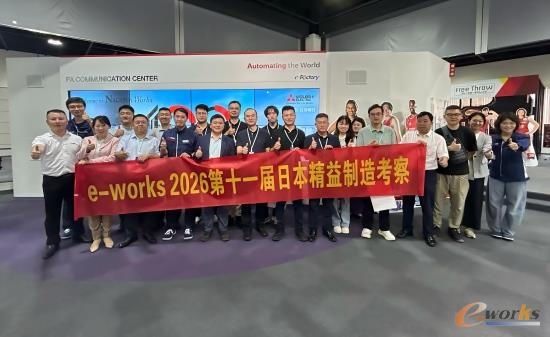
3. Murata — Global Hidden Champion in Electronic Components
Founded in 1944 in a compact 150-square-meter workshop, Murata has grown into a global industrial leader, boasting 74,000+ employees across 83 subsidiaries and an annual revenue exceeding 1.8 trillion Japanese yen, setting a benchmark for technology-driven sustainable growth.
As an undisputed hidden champion in the electronic component industry, Murata occupies 40% of the global MLCC (multi-layer ceramic capacitor) market, with a market share of over 70% in high-end MLCC products for AI servers, maintaining stable double-digit profit margins over the long term. The company has successfully seized every wave of electronic industry innovation, from traditional radio equipment to modern AI data center hardware. Through in-depth basic research on ceramic materials and strategic industrial mergers and acquisitions, Murata has built a fully self-controlled integrated industrial chain.
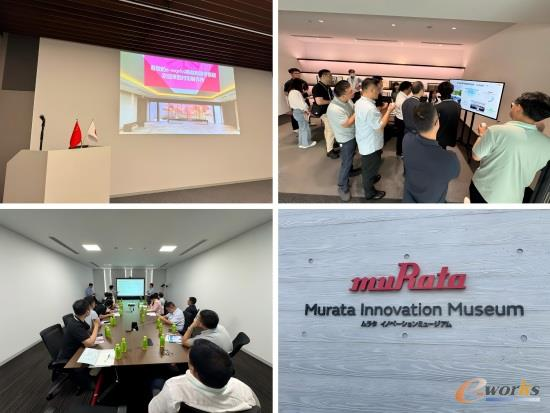
Murata's 80-year growth from a small workshop to a global industry benchmark stems from its persistent focus on ceramic core material technology and precise judgment of industrial trends. Long-term industrial competitiveness lies in continuous polishing of core capabilities alongside iterative technological innovation. The deep integration of generative AI and on-site manufacturing expertise has built Murata’s irreplicable industrial moat.
4. Makino — Closed-Loop Ultra-precision Manufacturing from Flexible Machining to Spindle Assembly
At Makino Atsugi Plant, the real-time digital monitoring dashboard visualizes full-line production status, paired with a complete set of lean visual management systems — including progress scheduling boards, standardized tool labeling, ISO compliance displays and risk prevention charts. The site also adopts Japan’s mature “point-and-call” safety verification mechanism to eliminate on-site operational risks.
Equipped with FMS flexible manufacturing systems and 5-axis machining centers, the plant achieves ultra-precision machining with a tolerance of ±3μm for high-hardness mold components, with individual finished parts requiring no secondary deburring process. The four-story dedicated spindle assembly plant features constant-temperature and constant-humidity cleanrooms on the third floor, with a monthly output of 600 customized high-precision spindles. Notably, all self-developed core spindles are exclusively supplied for Makino’s own machine tools and never sold to external customers. Before delivery, every spindle undergoes a 20-hour continuous load test to verify thermal deformation stability and lubrication performance, with precision calibration completed by high-end coordinate measuring equipment.
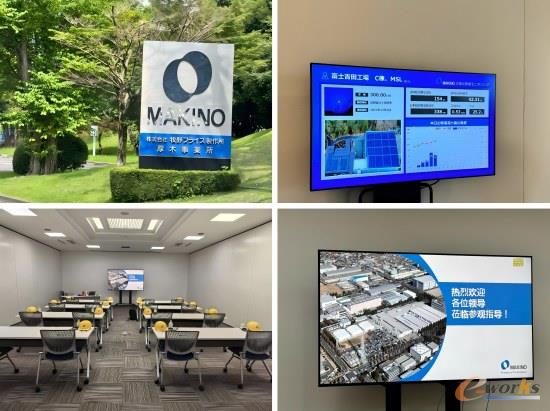
Delegation group photo at Makino
5. Special Lecture at JMAC— Redefining Lean Beyond Traditional Factory Boundaries
On the afternoon of June 30, the delegation attended an exclusive expert lecture at JMAC, adjacent to Tokyo Tower. Delivered by Hideki Nishioka, Director of JMAC's Asia Division, the session reconstructed the modern connotation of lean management with a novel and down-to-earth perspective.
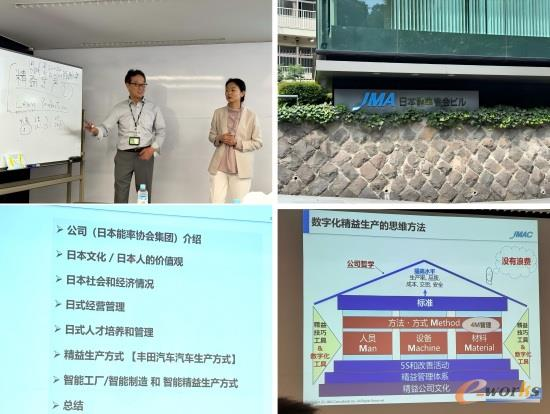
The lecture put forward a forward-looking and thought-provoking viewpoint: the emergence of the “8th manufacturing waste” — excessive and blind digitalization. It emphasized that digital tools are auxiliary means to empower manufacturing rather than the core pursuit. Unplanned, rigid digital system deployment that deviates from on-site production demands will generate new operational redundancies, which runs counter to the essence of lean improvement. This innovative view triggered in-depth discussions among participating enterprise executives.
6. Subaru— Lean Transformation and Vitality Renewal for Legacy Automakers
Subaru Yajima Plant is a core manufacturing base spanning 550,000 square meters with more than 5,300 on-site employees. Through sustained technological renovation and iteration, the factory has achieved flexible mixed-line production of fuel, hybrid and pure electric vehicles, with a stable daily output of 1,800 complete vehicles.
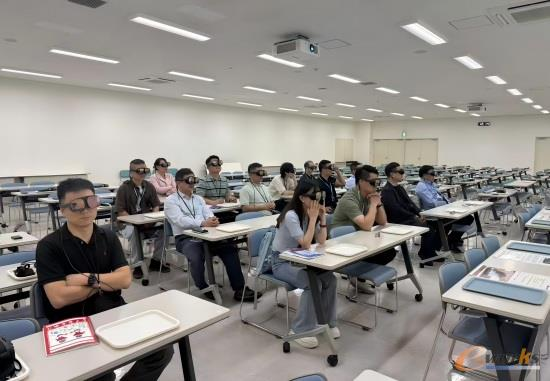
7. University of Tokyo: Frontier Industry-Academia Manufacturing Dialogue
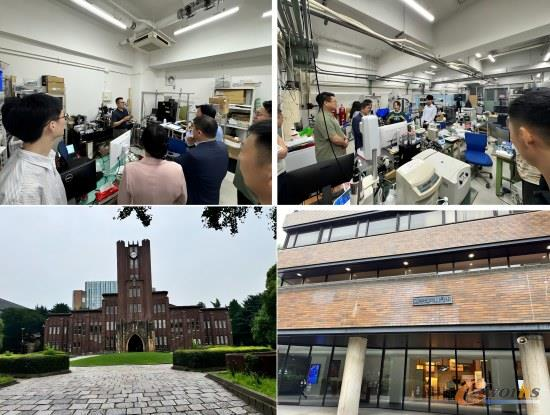
On the same day, the delegation conducted high-level academic exchanges at the University of Tokyo. The seminar covered five cutting-edge research directions in advanced manufacturing: deep learning-based prediction of nano-scale laser machining surface quality, human-machine interface ergonomic optimization, fuel cell coating informatics, additive-subtractive hybrid manufacturing technology, and AI-driven precision robot error compensation. The frontier research fully reflects the deep integration of artificial intelligence and traditional precision manufacturing technology. Dr. Huang Pei also delivered a special sharing on the latest research achievements and industrial transformation practices of China's smart manufacturing sector.
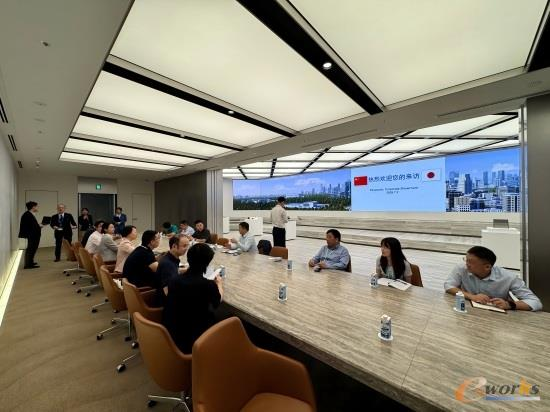
8. Panasonic — Century-Old Enterprise's Strategic Green B2B Transformation
Founded in 1918 by Konosuke Matsushita, the century-old enterprise has completed a comprehensive strategic transformation, shifting from traditional consumer electronics to a professional B2B service provider focusing on smart manufacturing and zero-carbon infrastructure for intelligent and sustainable societies. Currently, Panasonic operates more than 500 global subsidiaries with an annual revenue of 8.46 trillion Japanese yen.
The headquarters exhibition hall systematically displays Panasonic's mature Design for Circular Economy (DfCE) philosophy and practical achievements. The enterprise's modular household products adopt tool-free rapid disassembly design, supporting efficient material classification, recovery and recycling. Its self-developed Building Integrated Photovoltaics (BIPV) have achieved large-scale commercial mass production. Compared with traditional silicon solar modules that require 2 to 3 years for energy payback, the 1m×1.8m perovskite solar panels shorten the energy recovery cycle to merely 3 to 4 months. Meanwhile, the product supports personalized pattern customization, enabling perfect integration with architectural facade design.
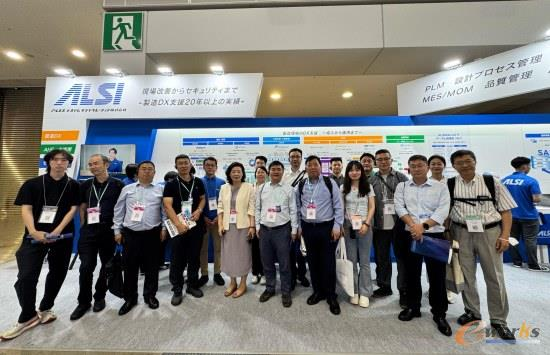
9. Manufacturing World Japan 2026: AI Emerges as Core Collaborative Engine for Modern Manufacturing
Manufacturing World Japan 2026 is one of Japan's largest comprehensive manufacturing exhibition. This year's show gathered 2,109 exhibitors and attracted over 81,000 professional visitors across 12 specialized exhibition zones, covering manufacturing digital transformation, industrial IoT, generative artificial intelligence, intelligent maintenance, additive manufacturing and precision metrology.
10. Alps Alpine: A Hidden Champion's Talent-Centric Sustainable Manufacturing
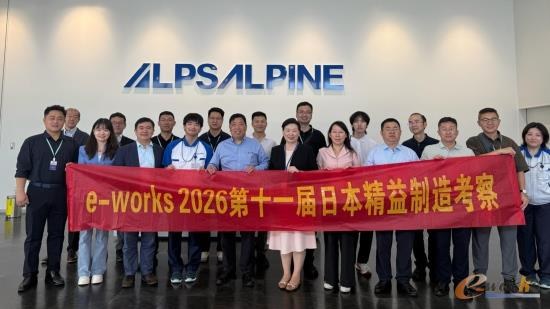
Founded in 1948, Alps Alpine is a global leading enterprise specializing in electronic components and automotive communication systems, recording a fiscal year 2024 sales revenue of 990.4 billion Japanese Yen and employing more than 26,000 staff globally. The company’s flagship tactile switches hold a 50% global market share and occupy 70% of the automotive-grade market, securing its dominant industry position. Covering an area of 80,000 square meters, the Furukawa Plant has 1,238 employees and consists of four production buildings, focusing on precision mold processing, automotive SMT production, automated VCM assembly lines, centralized production monitoring, as well as electroplating and coating processes.
The entire plant adheres to the core manufacturing philosophy of “delivering premium products via zero-waste workflows”, underpinned by the 4M management system (Manpower, Machine, Method, Material) and rigorous QCD optimization (Quality, Cost, Delivery). Its automated robotic assembly lines are equipped with inline precision testing devices and error-proof sensors, achieving full-process defect elimination and stable product quality. To consolidate technical strength and talent reserves, the plant launched an in-house Manufacturing Training Institute in 1998, offering stepwise professional training courses covering mold craftsmanship, quality engineering and 3D digital design. The institute completed over 10,000 training sessions in fiscal 2024, making the Furukawa Plant the global technical benchmark for the Alps Alpine Group.
The enterprise’s global market dominance originates from its ultra-focused professional layout and in-depth industrial specialization. More importantly, its long-term core competitiveness stems from a systematic and standardized talent development system. Alps Alpine takes standardized technical education as a core strategy to cultivate sustainable human capital, building its most enduring and irreplicable competitive advantage.
11. Kirin Brewery: The Ultimate Pursuit of Quality in Lean Manufacturing
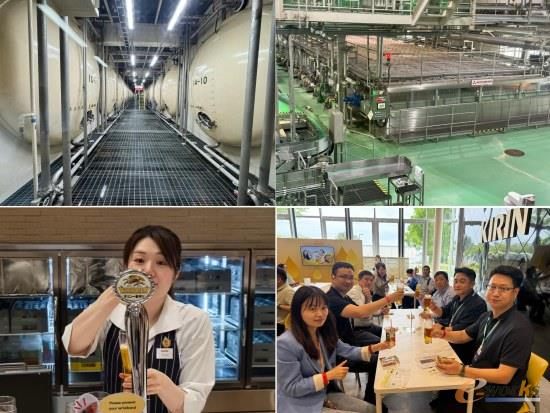
At Kirin Brewery Sendai Plant, the delegation inspected the full industrial brewing workflow, including raw material display of two-row barley and high-quality hops, automated intelligent fermentation tanks, multi-stage precision filtration lines and high-speed automated canning production lines.
A standout highlight of the site visit was a professional blind tasting comparison between primary and secondary wort samples. Kirin's iconic Ichiban Shibori (First Press) brewing process strictly retains only the pure first-flow filtered wort while eliminating secondary wort that carries bitter impurities. Prioritizing superior flavor quality over production yield, this refined technique consumes 1.5 times more malt raw materials than conventional brewing processes, embodying the brand's uncompromising quality stance. The delegation also observed the plant's fully automated sterile filling and intelligent quality inspection systems, followed by an on-site tasting of three core Ichiban Shibori product lines. Served via a standardized three-stage pouring technique, the beer delivers delicate, smooth and velvety foam with a pure taste. The study tour concluded with a group toast, marking the successful completion of this cross-industry lean manufacturing field investigation.
Furthermore, the forward-looking perspective shared in the JMAC lecture delivers critical guidance for manufacturing digitalization worldwide, particularly for Chinese enterprises undergoing smart upgrading: digitalization serves as an enabling tool rather than an ultimate strategic goal. All technological iterations must target tangible on-site operational pain points. Excessive, unplanned digital investment will only generate new operational waste and dilute the efficiency gains of lean management.
From the century-old iteration of lean philosophies to the construction of AI-powered future smart factories, the study tour verifies that world-class manufacturing competitiveness rarely stems from disruptive technological breakthroughs alone. Instead, it is built upon sustained company-wide incremental optimization, human-centric talent cultivation, and an unwavering, long-term pursuit of superior quality across all production and management links.